
Updated 8 February 2026 at 06:24 IST
US Accuses China Of Secret Nuclear Test Post-Galwan Clash With India In 2020
US accuses China of secret nuclear test in June 2020, just days after Galwan Valley clash with India, using "decoupling" technique to evade detection, amid Covid-19 pandemic, raising nuclear proliferation concerns.
- World News
- 5 min read

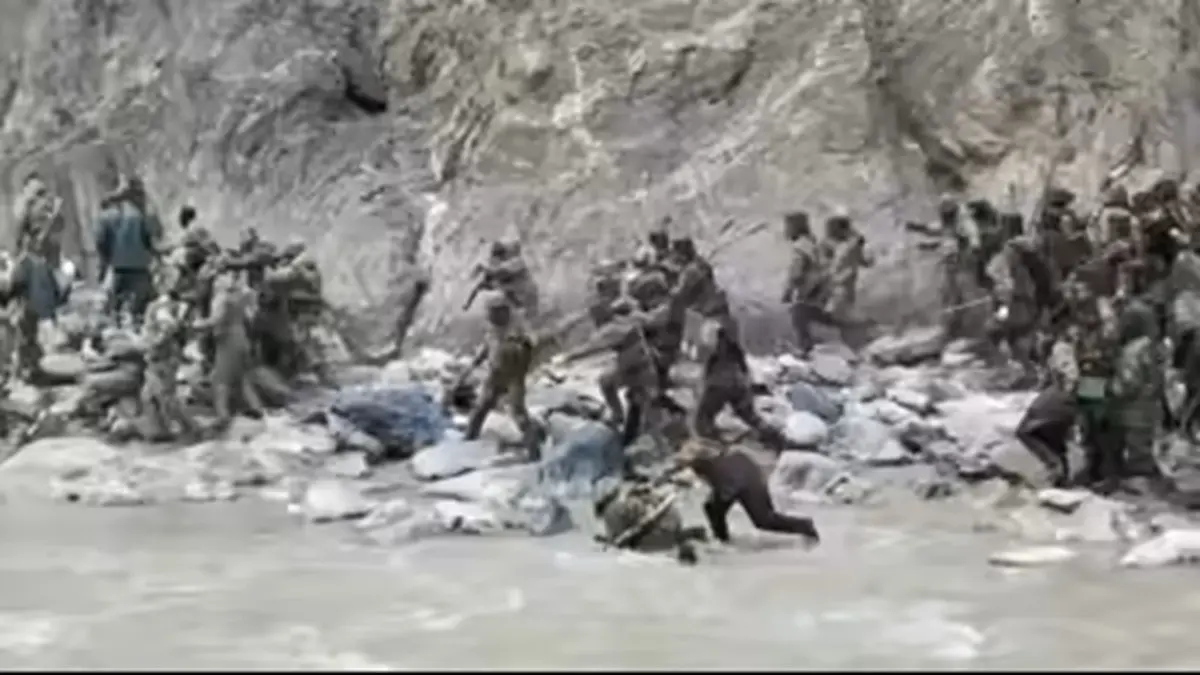
Washington: The United States has left the world abuzz with the revelation that China allegedly conducted a secret nuclear test in June 2020, just days after the deadly Galwan Valley clash between the Indian Armed Forces and the Chinese forces. The revelation, made by US Under Secretary of State Thomas DiNanno, suggested that Beijing capitalised on the absolute mayhem of the early Covid-19 pandemic to advance its atomic arsenal.
Speaking at a high-stakes United Nations (UN) conference on disarmament in Geneva on Friday, DiNanno detailed a timeline that adds a chilling new dimension to the history of the current decade, stirring concerns about nuclear proliferation and regional stability.
He stated that the US government is aware of China's nuclear explosive tests, including one conducted in the year 2020, on June 22, using a technique called "decoupling" to evade detection. According to the experts, the technique involves detonating an explosive in a large underground cavity to muffle seismic waves, making it challenging for global agencies to detect.
Importantly, the timing of the alleged nuclear test was crucial, coming just 7 days after the brutal hand-to-hand combat in the Galwan Valley, which claimed the lives of 20 Indian soldiers and many more Chinese personnel in number. The faceoff was one of the deadliest confrontations between India and China in decades, triggering tensions along the Line of Actual Control (LAC).
Advertisement
DiNanno's allegations have drawn global attention, with China denying any wrongdoing. Shen Jian, China's ambassador on nuclear disarmament, accused the US of hyping up the "so-called China nuclear threat" and claimed that Beijing has always acted responsibly on nuclear issues.
The US has long been wary of China's nuclear ambitions, with estimates suggesting that Beijing has around 600 nuclear warheads. The alleged nuclear test comes as the last nuclear arms deal between the US and Russia, the Strategic Arms Reduction Treaty (START), expired on February 5, pushing fears about a possible global arms race.
Advertisement
DiNanno's allegations suggested that China's actions are a clear breach of the Comprehensive Nuclear Test Ban Treaty (CTBT), which bans explosive nuclear tests.
The diplomatic bombshell dropped at a dangerous moment for global security, arriving just as the New START treaty, the final remaining nuclear arms control pact between the US and Russia, officially expired on February 5, 2026. President Donald Trump has been vocal about his refusal to renew bilateral deals that do not account for China’s rapidly expanding military might. By making these 2020 intelligence reports public now, Washington is clearly framing China as a rogue nuclear actor that must be reined in by any future international security architecture.
Beyond the geopolitical posturing, the technical details provided by DiNanno paint a picture of deliberate deception. The US claimed that Beijing utilised the sophisticated technique known as decoupling to muffle the seismic signals of the explosion, effectively blinding global monitoring agencies. By detonating a device within a massive underground cavity, the seismic waves are heavily damped, allowing a yield-producing test to occur with a reduced risk of detection by the standard international arrays.
Report Hints At Calculated Move Along LAC
DiNanno took to social media to amplify the findings, stating on X, saying, "The US government is aware that China has conducted nuclear explosive tests, including preparing for tests with designated yields in the hundreds of tons. China has used decoupling to hide its activities from the world. China conducted one such yield-producing nuclear test on June 22, 2020."
The specific date, barely a week after the Galwan confrontation, points towards the Lop Nur site in the Xinjiang region, a facility that sits in a geography sensitive to India’s northern borders.
The geopolitical experts have suggested that while the US has not explicitly stated that the nuclear test was a direct reaction to the Himalayan clashes, the clash provided the "perfect cover”, to carry out the test, at a time when the world’s attention was diverted by the deadliest border skirmish in 45 years, pointing out at a calculated use of the news cycle. At the time, aggressive troop movements along the LaC had already pushed regional stability to a breaking point.
China Is Signatory To CTBT
China remains a signatory to the Comprehensive Nuclear Test Ban Treaty (CTBT), which prohibits all explosive nuclear testing, though like the United States, it has never formally ratified the document. However, the lack of ratification creates a legal grey area that Beijing has allegedly exploited.
The US remained deeply concerned about China’s trajectory, with reports indicating that Beijing’s warhead count has surged to around. The Trump administration’s recent orders to resume military nuclear testing were explicitly justified by the perceived secretive activities of China and Russia. "Russia's testing and China's testing, but they don't talk about it," Trump remarked in a recent interview, showing his insistence that any future deal must be trilateral.
The response from Beijing has been predictably dismissive but notably nuanced. China’s ambassador on nuclear disarmament, Shen Jian, did not issue a flat rejection of the specific 2020 date during the Geneva conference. Instead, he resorted to familiar rhetoric, stating that Beijing has always acted "prudently and responsibly”. Jian stated, "China notes that the US continues in its statement to hype up the so-called China nuclear threat. China firmly opposes such false narratives... The US is the culprit for the aggravation of the arms race."
Published By : Abhishek Tiwari
Published On: 7 February 2026 at 23:04 IST