
'Block Bibi, Eat Light & Sleep’: Iran's Savage 4-Point Advice To Trump Goes Viral
Iran’s embassy in Zimbabwe takes a witty swipe at Donald Trump after his ‘brilliant day’ post, serving a viral four-point ‘advisory’ that drags Benjamin Netanyahu into the meme storm.
- Viral News
- 3 min read

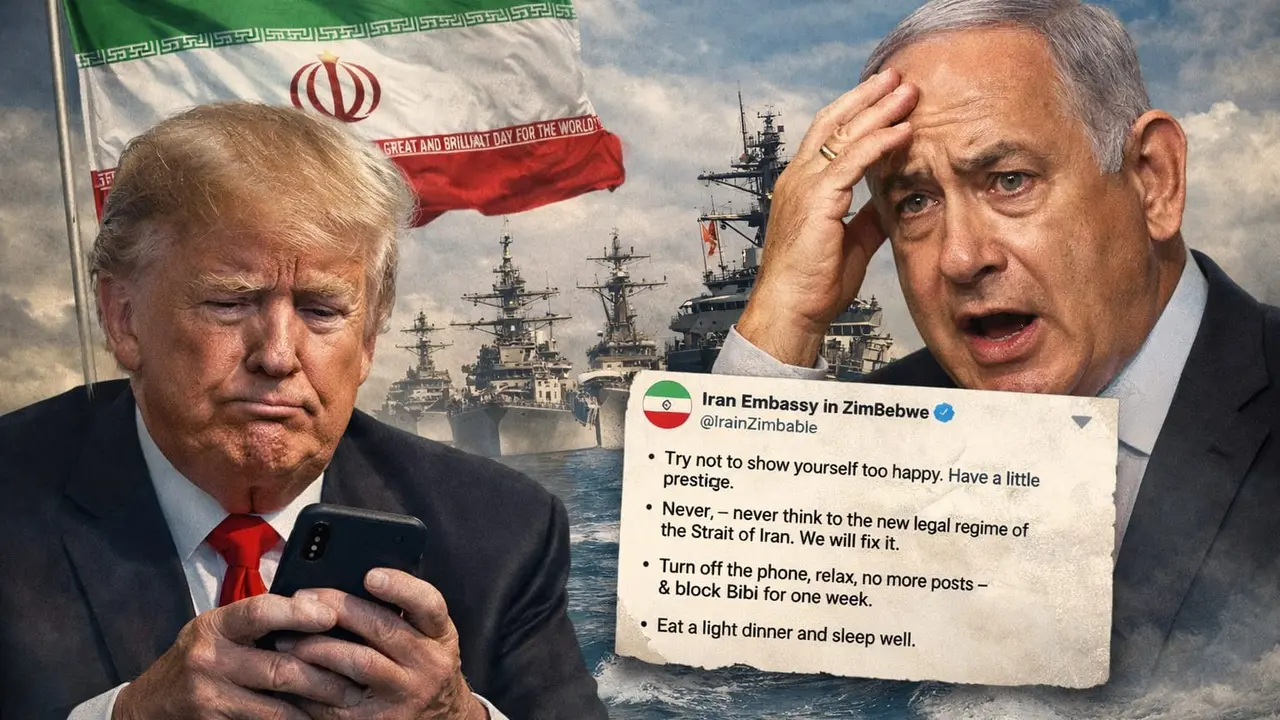
In a moment that has set social media buzzing, Iran’s embassy in Zimbabwe delivered a sharply worded and unexpectedly witty response to a celebratory post by US President Donald Trump after Tehran announced to open the Strait of Hormuz for the remainder of the ceasefire period.
After Trump wrote on Truth Social, “A great and brilliant day for the world! DTJ,” the Iranian mission took to X with a four-point “advisory” that quickly went viral.
The embassy’s post read like a mix of sarcasm and satire: “Try not to show yourself too happy. Have a little prestige; Never, (emphasize) never think to the new legal regime of the Strait of Iran. We will fix it; Turn off the phone, relax, no more posts and, block Bibi for one week; Eat a light dinner and sleep well.”
The reference to “Bibi” is widely understood as a jab at Israel Prime Minister Benjamin Netanyahu, adding a geopolitical edge to what many users described as a “diplomatic roast”.
Advertisement
Internet reacts: memes, mockery & mayhem
The comments section quickly spiralled into a mix of humour, political jabs and outright trolling. Some users amplified the sarcasm, saying, “He needs good treatment apart from this.” Another said, “Step 4 is the most important, eat light and sleep”, while one said, “Block Bibi for a month at least.”

Others leaned into meme culture. One user commented, “Here’s some aloe vera gel for that fragile ego”, another said, “This is the best embassy account, tone is on point!”
Advertisement
A few comments veered into conspiracy theories and geopolitical speculation, while others mocked Trump’s perceived impulsiveness online, suggesting he “throw away his phone” or “take a break from posting”.
Diplomacy, but make it viral
The exchange highlights a growing trend where official state handles adopt a more informal, sometimes biting, tone on social media to engage global audiences. What once would have been a formal diplomatic rebuttal has now turned into viral content, blurring the line between statecraft and internet culture.
Iran’s response has arguably stolen the spotlight, if not through policy, but at least through punchlines.
And if social media reactions are anything to go by, the internet is fully entertained.